
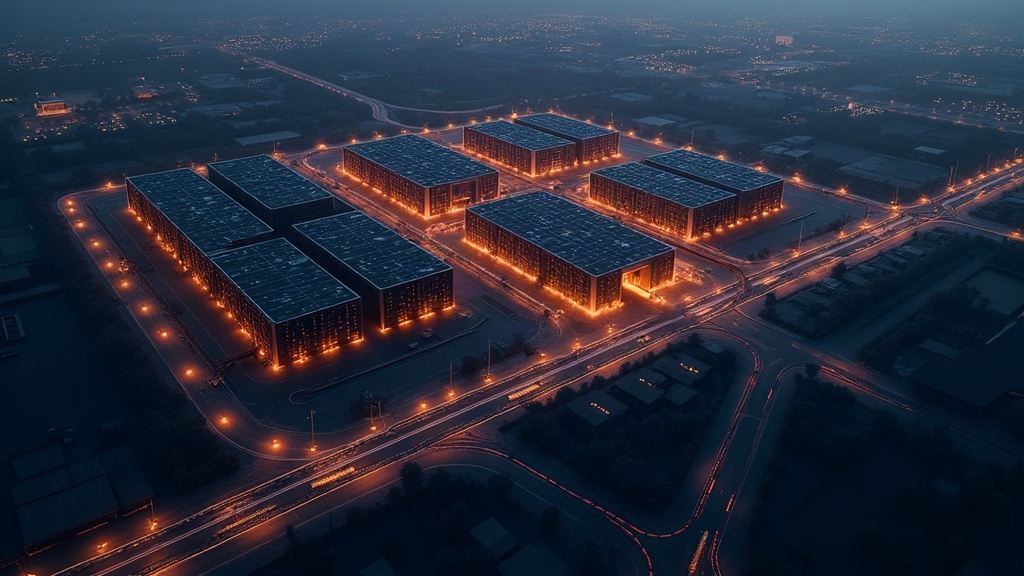
BF Saul Companies is pursuing a zoning conversion for a 37-acre industrial data center site at Dulles Technology Park, east of Route 28 in Sterling. The Loudoun County Planning Commission voted 5-4 to recommend denial on September 17, 2026, and the application now sits with the Board of Supervisors. The outcome is not certain. But if this project moves forward, it lands in one of the most talent-saturated and most talent-competed labor markets in the country, and the hiring problem starts the day entitlements clear.
Data center hiring comes in three waves
- •Construction and trades, first. Electricians, pipe fitters, civil crews, and low-voltage specialists show up before a foundation is poured and stay through mechanical completion.
- •Commissioning, the pressure point. Commissioning engineers and integrated systems test leads arrive late in construction and are the hardest people to find. Every project in the region needs them at roughly the same time.
- •Operations, for the life of the building. Critical facilities engineers and technicians staff the facility from day one of commercial operation and stay for years.
The construction wave is a local trades problem; commissioning and operations are national.
What these roles pay in 2026
| Role | Average base | Typical range |
|---|---|---|
| Commissioning engineer | ~$147,000 | $84,000 to $196,000 |
| Critical facilities engineer | ~$132,000 | $117,000 to $147,000 |
| Critical facilities technician | ~$89,000 | market varies by shift and tier |
| Facilities technician (entry) | ~$54,000 | $42,500 to $77,000 |
Northern Virginia commands a cost-of-living premium over national medians, so candidates with options will expect offers at or above the midpoint of each range above.
The certifications and background that actually matter
Commissioning engineers: a background in MEP systems, experience on at least one data center integrated systems test, and familiarity with Cx protocols specific to critical environments. ASHRAE Commissioning Process Management Professional or equivalent is increasingly expected. Critical facilities engineers: OSHA 30, NFPA 70E, and hands-on experience with UPS systems, generators, and cooling infrastructure. Experience working in a live Tier III or Tier IV environment matters more than any single certificate. Technicians: EPA 608 for refrigerant handling, basic electrical safety training, and a track record of working rotating shifts. Many candidates in this market carry prior experience from neighboring hyperscale campuses, which is worth more than a certificate stack. Construction trades: OSHA 10 minimum, OSHA 30 preferred. Loudoun's active build cycle means general contractors have already sorted their preferred crews; access to committed labor depends on relationships with those GCs, not just open recruiting.
How to structure the offer
Commissioning engineers are almost always project-to-project workers. Structure those engagements as contract or contract-to-hire with a per diem for anyone relocating temporarily. The national pool expects it. Operations roles are permanent. Loudoun's cost of living means relocation packages matter even for candidates coming from elsewhere in the D.C. metro area. Budget for one to two months of assistance for out-of-region hires and expect candidates to negotiate it.
A flat salary without shift differential, on-call pay, or relocation support will lose candidates to the dozen other operators within 15 miles who offer all three.
For entry-level technicians, the better play is often internal development. Hire people with trades experience or a relevant associate's degree, pay for certifications, and build a pipeline rather than competing for journeymen who are already committed elsewhere.
Where each role actually gets sourced
Commissioning engineers come from a national pool. The best candidates are mid-project somewhere else and not browsing job boards. They are reached through direct outreach. Critical facilities engineers and senior technicians are sourced locally first in Loudoun because the experience base is real. Many have worked one or two campuses over and are open to a move for the right operator and shift structure. They do not apply broadly. Entry technicians come from community college programs (Northern Virginia Community College feeds this market), trades apprenticeships, and lateral moves from building facilities management. This is the one category where job postings produce applicants. Construction trades in Loudoun are sourced through the GC relationships already embedded in the data center build cycle. If BF Saul's general contractor is already working in the county, the crew pipeline follows. If not, it has to be built from scratch, and that takes time.
The Sterling reality: abundant trades, but the calendar is already full
The non-obvious insight here is not that Sterling lacks experienced data center labor. It has more of it than almost any market in the country. The problem is that every qualified electrician, HVAC tech, and low-voltage crew in Loudoun County is already spoken for months in advance by other projects on the same road. Data Center Alley runs from Ashburn to Sterling and has hundreds of operating facilities and more in active construction. Workers in this market are not idle; they are booked. If BF Saul's project secures Board of Supervisors approval and reaches the contracting phase, the single most important hiring action is early alignment with contractors who are already embedded in Loudoun's build cycle, before the schedule is set, not after. Showing up at bid time and expecting to compete for committed crews on price alone is a losing strategy in this zip code.
The timeline is the hiring plan
The application is pending with the Board of Supervisors following the Planning Commission's 5-4 denial recommendation in September 2026. Nothing about hiring is urgent today. But the moment approval lands, the clock starts on permitting, and the construction labor market does not wait. Commissioning search typically needs to start 12 to 18 months before integrated systems testing begins. Operations hiring needs to begin 6 to 9 months before the facility goes live. Both of those windows open faster than most project teams expect. The time to build the hiring plan is before approval, not after.
How NextDCX helps
NextDCX recruits for your toughest data center roles. Share the work, location, and experience your team needs. We run a fresh search for every role, approach people directly, and speak with every candidate before introducing them. You get people screened for the work, pay, location, and availability, ready to meet your hiring team. We also support recruiting partners. If the Dulles Technology Park site is on your board, send us the roles and we start now. For the project background, see BF Saul Companies' Loudoun County zoning application. Comp sources: ZipRecruiter and dcgeeks 2026 salary data.
Have a data center role to fill?
Send us the role Monday. Get three screened candidates by Friday, ready to meet your hiring team.
Read More Blog Posts
Project Delta Wins Rezoning for a Several-Hundred-Megawatt AI Data Center on Nearly 2,000 Acres Near Walnut Cove, North Carolina
The hyperscale AI data center proposal known as Project Delta cleared its final land-use hurdle on September 14, 2026, when the Stokes County Board of Commissioners approved a conditional rezoning for a nearly 2,000-acre
BF Saul Companies Seeks Zoning Conversion for Data Center at Dulles Technology Park in Sterling, Virginia
BF Saul Companies is pursuing a rezoning that would convert approximately 37 acres at Dulles Technology Park, east of Route 28 in Sterling, Loudoun County, Virginia, into an industrial data center site.