
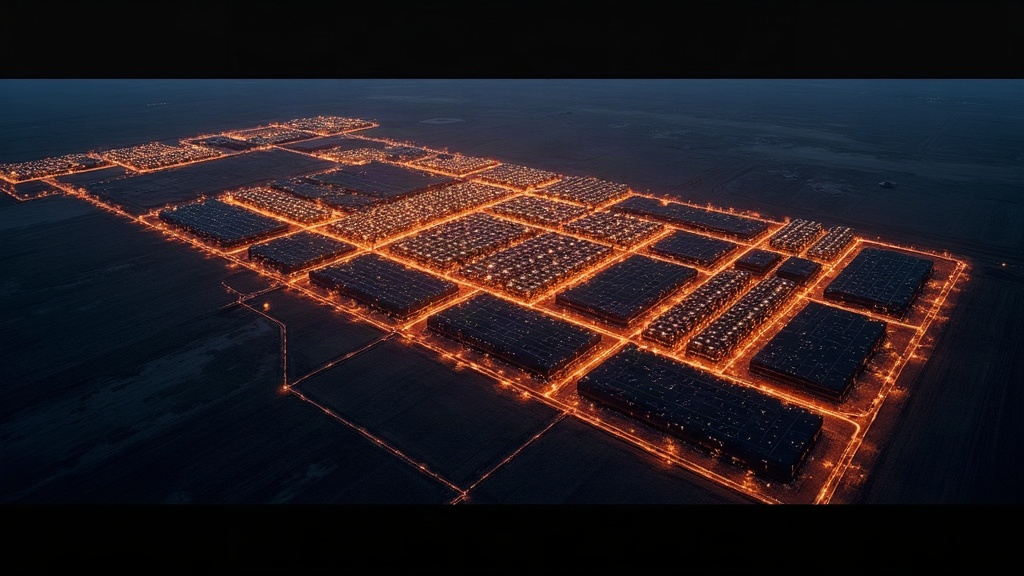
Vantage Data Centers just received unanimous county commissioner approval for Project Latigo, a 480 MW campus on 1,835 acres about 12 miles south of Cheyenne. The initial phase carries a roughly $4 billion investment, with a potential build-out of $20 billion and approximately 2,000 skilled jobs at full completion. The zoning framework is set. What is not set is the workforce.
Data center hiring comes in three waves
- •Construction and trades, first. Electricians, pipefitters, heavy equipment operators, and ironworkers move the ground and raise the buildings. This wave is the largest by headcount and the most time-compressed.
- •Commissioning, the pressure point. A smaller, specialized group tests and verifies every critical system before the facility goes live. These people are in short national supply and cannot be replaced with local hires.
- •Operations, for the life of the building. Critical facilities engineers and technicians run the campus indefinitely. This is the permanent workforce, and hiring it too late is the most common mistake in data center development.
The construction wave is a regional trades problem; commissioning and operations are national searches from day one.
What these roles pay in 2026
| Role | Average base | Typical range |
|---|---|---|
| Commissioning engineer | ~$147,000 | $84,000 to $196,000 |
| Critical facilities engineer | ~$132,000 | $117,000 to $147,000 |
| Critical facilities technician | ~$89,000 | Market-rate by shift and site |
| Facilities technician (entry) | ~$54,000 | $42,500 to $77,000 |
Wyoming carries no state income tax, which improves the real value of these figures relative to Colorado competitors without requiring a higher nominal offer. Hiring managers should communicate that clearly in every offer conversation.
The certifications and background that actually matter
For commissioning engineers: hands-on experience with medium-voltage switchgear, generator paralleling, and chilled-water plant startup. NETA certification or equivalent field testing credentials carry real weight. A background in mission-critical construction, not just general commercial, separates candidates who can move a schedule from those who slow it down. For critical facilities engineers and technicians: Uptime Institute ATD or equivalent data center operations training, OSHA 30, and demonstrated experience with BMS and DCIM platforms. On a campus with on-site natural gas generation like Project Latigo, familiarity with generator operations and fuel management is a practical differentiator.
Candidates with oil-and-gas plant operations backgrounds in Wyoming and Colorado transfer into data center critical facilities roles more smoothly than hiring managers often expect, and that pool is larger here than in most markets.
How to structure the offer
Relocation and per diem. The site sits in unincorporated Laramie County, 12 miles from Cheyenne. Permanent operations hires will likely live in Cheyenne or along the I-25 corridor. Offer a relocation package for any hire coming from outside Wyoming. For commissioning engineers, a per diem structure covering the startup period is standard and expected. On-site accommodation for construction trades. This is built into the approved PUD. Vantage's plan includes modular workforce housing at the site specifically to support peak construction headcount. For traveling trades workers drawn from Denver, Greeley, Fort Collins, or farther out, eliminating the housing and commute problem substantially expands who will say yes to the job. Contract versus permanent. Commissioning is almost always contract or contract-to-hire. Operations roles should be structured as direct hires from the start; candidates who could run a hyperscale facility have options, and a "we'll see how it goes" framing loses them to competitors with cleaner offers.
Where each role actually gets sourced
Construction trades. Start with IBEW locals and pipefitter locals in Denver and along the Front Range. Wyoming's union density in building trades is lower than neighboring Colorado, so contractors working Project Latigo will need to pull from Denver-area locals, travel agreements, and non-union shops recruiting across the Mountain West. Commissioning engineers. These are national candidates. Post in the right places, but primarily reach them directly. They are not browsing job boards; they are finishing one startup and deciding where to go next. Critical facilities engineers. A mix of national search and targeted recruitment from the Microsoft and hyperscale facilities already operating in Laramie County. People who have already relocated to the Cheyenne area for a data center role are the warmest possible leads. Facilities technicians. Local and regional. Cheyenne community college technical programs, military transition pipelines from F.E. Warren Air Force Base, and the existing industrial workforce in the county are all real sources.
The Laramie County reality: strong on energy trades, thin on data center operators
The single most important staffing fact about Project Latigo is that Vantage designed workforce accommodation into the site, which turns a geographic limitation into a recruiting advantage no competitor in this market has replicated at this scale.
Laramie County already hosts Microsoft data centers and at least one other large campus, so the region has begun building a data center operations talent pool. But 480 MW arriving in a county with a small metro draws far more demand than the local market can satisfy on its own. The construction workforce will have to be imported, and Cheyenne's housing supply cannot absorb thousands of traveling workers at peak build. The on-site modular housing approved in the PUD solves that problem directly, letting Vantage and its contractors recruit from national trade markets, not just regional ones. That expands the effective radius for electricians, pipefitters, and mechanical trades dramatically. The hiring teams that understand this early will use it as a recruiting pitch. The ones that miss it will be surprised when they cannot fill shifts from local boards alone.
The timeline is the hiring plan
The PUD zoning is approved. Site plan applications and permits are the next gate. The construction window is targeted roughly 2027 through 2030. That means commissioning engineer recruiting for phase one should begin 18 to 24 months before the first planned energization date, and operations hiring should begin no later than 12 months before first handover. Both of those clocks are already running.
How NextDCX helps
NextDCX recruits for your toughest data center roles. Share the work, location, and experience your team needs. We run a fresh search for every role, approach people directly, and speak with every candidate before introducing them. You get people screened for the work, pay, location, and availability, ready to meet your hiring team. We also support recruiting partners. If Project Latigo is on your board, send us the roles and we start now. For the buildout, see Vantage's Laramie County Project Latigo approval. Comp sources: ZipRecruiter and dcgeeks 2026 salary data.
Have a data center role to fill?
Send us the role Monday. Get three screened candidates by Friday, ready to meet your hiring team.
Read More Blog Posts
Applied Digital Breaks Ground on Polaris Forge 3, a ~300MW HPC Campus in Oliver County, North Dakota
Applied Digital is developing Polaris Forge 3, a high-performance computing data center campus in Oliver County, North Dakota, sited west of the town of Center.
Vantage Data Centers Wins Zoning Approval for 480MW Project Latigo Campus in Laramie County, Wyoming
Vantage Data Centers has secured unanimous approval from the Laramie County Board of County Commissioners for a zone change enabling Project Latigo, a 1,835-acre data center campus roughly 12 miles south of Cheyenne, Wyo