
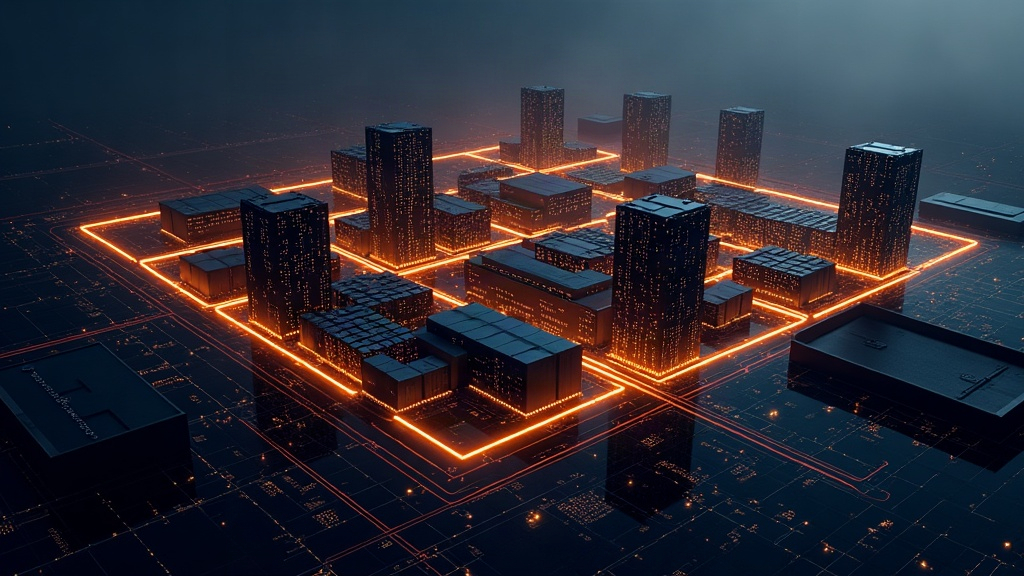
Lambda, the AI cloud and hardware company, announced on November 4, 2026, that it will anchor the proposed Red Clay Technology Center Campus in Lowndes County, Alabama. The planned investment is $33.1 billion, making it one of the largest data center commitments ever announced in the American South. Lambda published the announcement on its own blog, with follow-on coverage from the Alabama Political Reporter and The Model Press.
What was announced
Lambda will serve as the anchor tenant of a large-scale campus in Haynesville, with construction expected to begin in the first quarter of 2027 and run for up to five years.
| Detail | Announced figure |
|---|---|
| Total investment | $33.1 billion |
| Construction jobs | More than 1,000 |
| Permanent full-time jobs | More than 225 |
| Construction start | Q1 2027 |
| Construction duration | Up to five years |
| Power supplier | Alabama Power (pending regulatory approval) |
| Cooling | Closed-loop |
| Campus name | Red Clay Technology Center Campus |
Lambda has committed to covering the full cost of required power and grid infrastructure. No building count or square footage has been disclosed.
Who Lambda is
Lambda builds cloud infrastructure optimized for AI workloads, offering GPU clusters and on-demand compute to researchers, startups, and enterprises training large models. The company has expanded aggressively as demand for AI training capacity has outpaced the availability of purpose-built, GPU-dense facilities. This Alabama campus represents Lambda's largest publicly announced infrastructure commitment to date.
Why Lowndes County, and why now
- •Power access at scale. Alabama Power is the designated supplier, and Lambda has agreed to self-fund all required grid infrastructure upgrades, removing a common barrier to rapid energization.
- •Regulatory runway already cleared. Lowndes County approved the project's development and tax-abatement agreements on October 13, 2026, nearly three weeks before the public announcement, meaning the local approval process was resolved before Lambda went public.
- •Land availability outside saturated markets. Northern Virginia, Dallas, and Phoenix are facing interconnection queues and constrained sites. Rural Alabama offers room to build at the scale AI infrastructure now demands.
- •State-level competition for investment. Alabama has been active in recruiting large industrial and technology projects, and a $33.1 billion commitment anchors the state's position in that competition.
When a tenant commits to paying for its own grid infrastructure, the host utility's risk calculus changes, which can accelerate regulatory timelines that otherwise stall large campus projects for years.
Infrastructure scale and what closed-loop cooling signals
Closed-loop cooling at this scale is a deliberate choice, not a default. It limits water draw from municipal or surface sources, which matters in a rural county without the industrial water infrastructure of a major metro. For facilities operators evaluating this build, the design choice also implies a more complex mechanical plant: closed-loop systems require more sophisticated water treatment, more precise thermal balancing, and technicians trained on that equipment specifically. Commissioning a closed-loop campus of this magnitude will require talent that cannot be recruited locally at the volumes needed.
What it means for the region's labor market
Lowndes County has no existing data center footprint, which means every discipline required to build and operate this campus arrives from somewhere else. The nearest substantial labor market is Montgomery, roughly 25 miles northeast along U.S. Highway 80. Montgomery can supply general construction labor and some mechanical and electrical tradespeople, but the specialized roles that define a data center build, high-voltage switchgear technicians, controls and BMS specialists, data center commissioning engineers, and critical facilities managers, are not concentrated there. The five-year construction window is long enough to absorb multiple hiring waves, but it also means the project will compete continuously with other regional infrastructure and industrial work for the same pool of electricians, HVAC technicians, heavy-equipment operators, and construction managers. No single local employer serves as an obvious feeder for data center operations talent. The practical implication for workforce planning: construction management and commissioning roles will need to be recruited regionally and nationally from day one. The 225-plus permanent operations positions that follow are smaller in number but harder to fill, because they require hands-on experience with hyperscale or large colocation environments that simply does not exist in the county today. For a breakdown of the roles, compensation ranges, and sourcing strategies most relevant to this build, see our guide to hiring data center talent at the Lambda site prepared by Cloverleaf Infrastructure in Alabama. Sources: Lambda's announcement post, which first reported the investment; Alabama Political Reporter; and The Model Press.
Have a data center role to fill?
Send us the role Monday. Get three screened candidates by Friday, ready to meet your hiring team.
Read More Blog Posts
Hiring Data Center Talent in Lowndes County, AL: Roles, Pay, and Where the People Actually Are
Lambda's $33.1 billion commitment to the Red Clay Technology Center Campus in Haynesville is one of the largest announced data center investments in Alabama history.
Hiring Data Center Talent in Hawesville, KY: Roles, Pay, and Where the People Actually Are
Hawesville, Kentucky is about to have a data center hiring problem. TeraWulf is developing the Justified Data Campus on the former Century Aluminum site, three buildings, 401 MW of critical IT load, and a 20-year lease w