
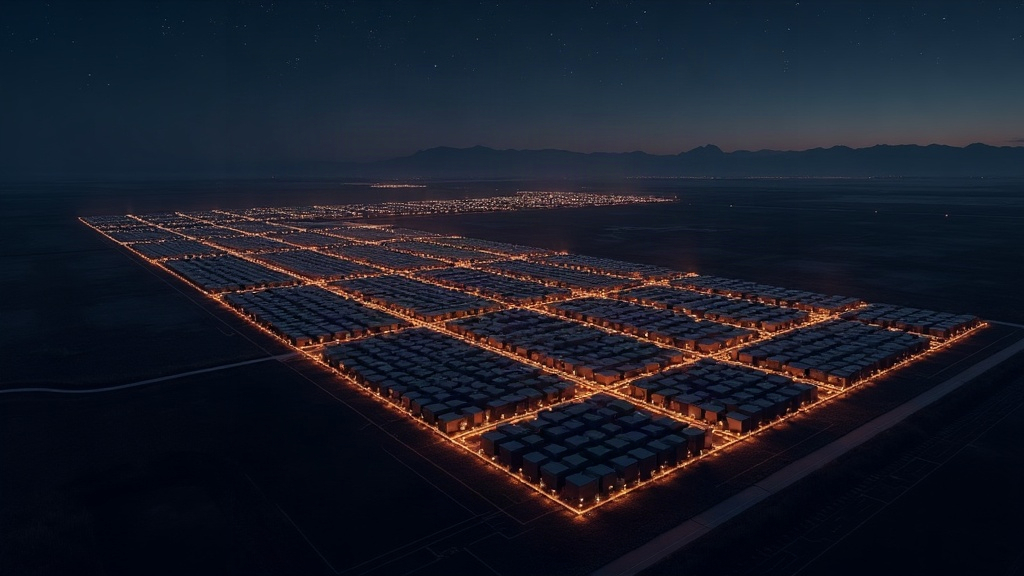
Site Layer 4, LLC cleared its first formal hurdle in Platte County on August 26, 2026, when the Platte County Planning and Zoning Commission voted unanimously to recommend rezoning 5,344 acres of privately owned ranchland from Ranch, Agricultural and Mining to industrial, setting the stage for a potential utility-scale energy storage and data center campus northeast of Wheatland near the Platte-Goshen county line. The vote was first reported by Cowboy State Daily.
What was recommended
The commission's action is a rezoning recommendation only. No data center has been approved, no square footage has been filed, and no megawatt figures have been made public. Actual construction would require a separate special-use permit and additional county review.
| Detail | Filed figure |
|---|---|
| Acreage under rezone request | 5,344 acres |
| Current zoning | Ranch, Agricultural and Mining (RAM) |
| Requested zoning | Industrial |
| Commission vote | Unanimous recommendation to rezone |
| Proposed uses | Utility-scale energy generation, energy storage, data center campus |
| Development phase | Phase 1 (site evaluation and feasibility) |
| Next decision | Platte County commissioners, September 2, 2026 at 1 p.m. |
The land is privately owned ranchland held by Gregor and Cindy Goertz in the Goshen Hole area. Developers told the commission the campus would generate its own power to support "America's growing computing needs," but no formal data center application beyond the rezone request has been submitted.
Who Site Layer 4 is
Site Layer 4, LLC is the named entity seeking the rezone. No further corporate background, parent company, or investor detail has been disclosed in public filings to date. The project remains in Phase 1, covering preliminary siting alongside financial, technical, and land-use feasibility work. Subsequent phases, if pursued, would secure utility contracts and permits before any construction begins.
Why Platte County, and why now
- •Transmission is already there. Eastern Wyoming sits along high-voltage corridors serving the regional grid, and the Goshen Hole area has deep infrastructure roots in irrigation and power generation. Self-generation capacity is explicitly part of the proposal, which sidesteps the queue constraints hitting developer-dependent sites elsewhere.
- •Land is available at scale. 5,344 contiguous acres of privately held ranchland is an asset that is simply not available near saturated data center markets. The Platte-Goshen county line area offers the footprint that primary markets cannot.
- •Wyoming's regulatory environment is favorable. The state has pursued energy-intensive industry actively, and the county's industrial zoning framework, once applied, is designed to accommodate exactly this category of infrastructure.
- •Power costs are competitive. Rural Wyoming's electricity rates for large industrial loads remain among the lower-cost options in the Mountain West, particularly for projects that propose to generate on-site.
Where large-acreage ranchland overlaps with existing high-voltage transmission and favorable state policy, utility-scale data center developers are moving to lock in zoning before the sites become contested.
The regulatory path still ahead
The commission was explicit that its vote does not approve a data center. The recommendation moves to the Platte County commissioners on September 2, 2026 for a final rezoning decision. If the rezone is granted, Site Layer 4 must then file for a special-use permit, which triggers its own separate public review cycle. Developers are in Phase 1, meaning the county could approve industrial zoning months or years before a shovel-ready application appears.
What it means for the region's labor market
A campus of this scale, if it advances, will be a multi-year construction event drawing on a labor pool shaped by agriculture, rail, energy, and transmission rather than any existing data center cluster. Platte and Goshen counties have no hyperscale data center footprint today, which means specialized data-hall MEP expertise would need to be imported from Cheyenne, the Colorado Front Range, or out of state.
The most actionable staffing insight is counterintuitive: the region's strongest local fit is not IT infrastructure talent but grid, substation, and water-systems labor. Irrigation districts and rural electric cooperatives in the Goshen Hole area carry deep experience with high-voltage switching, earthwork, and large-bore water infrastructure, and those workers are the natural first wave for a self-generating campus. Early outreach to regional utilities and irrigation-adjacent contractors is a more productive channel than waiting for a traditional construction labor pool to materialize.
The catch is competition. Cheyenne's expanding data center and logistics sector, combined with ongoing energy projects in Converse and Natrona counties, already pulls on the same regional electricians, linemen, and heavy civil crews. Any construction ramp at Wheatland will enter a market where the best craft labor is already committed elsewhere. For a full breakdown of roles, pay ranges, and sourcing strategy for this project, see our guide to hiring data center talent in Platte County, Wyoming. Sources: Cowboy State Daily, which first reported the commission vote, with additional context from earlier Cowboy State Daily coverage and the Platte County Government notice.
Have a data center role to fill?
Send us the role Monday. Get three screened candidates by Friday, ready to meet your hiring team.
Read More Blog Posts
Hiring Data Center Talent Near the Platte–Goshen County Line, WY: Roles, Pay, and Where the People Actually Are
Rural eastern Wyoming is about to have a data center hiring problem it has never faced before.
Hiring Data Center Talent in Hall County, TX: Roles, Pay, and Where the People Actually Are
Hall County is about to have a hiring problem unlike anything the Texas Panhandle has seen.