
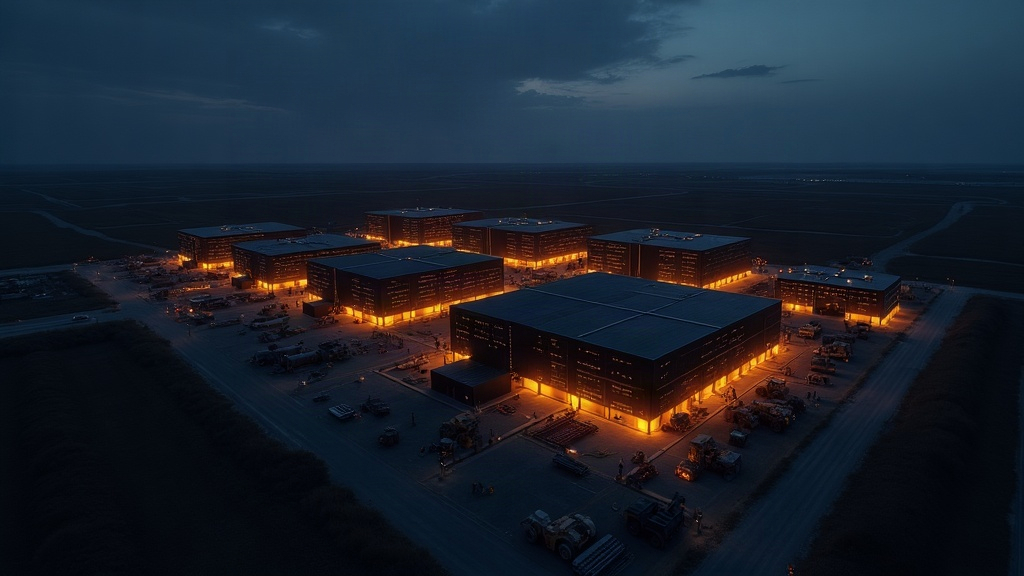
Applied Digital has begun site clearing and land grading for Polaris Forge 3, a roughly 300 MW high-performance computing campus west of Center, North Dakota. Oliver County is remote, lightly populated, and not a market where you post a job and wait. The talent this campus needs does not live nearby, and the hiring timeline is already running.
Data center hiring comes in three waves
- •Construction and trades, first. Civil, electrical, and mechanical contractors mobilize during site prep and structural build. This wave is local and regional, pulling from Bismarck-Mandan and traveling national crews.
- •Commissioning, the pressure point. Commissioning engineers and startup technicians arrive as systems come online. This is the hardest group to source and the one most likely to delay a power-on date if hiring starts late.
- •Operations, for the life of the building. Critical facilities engineers and technicians are permanent hires who stay after the contractors leave. At this scale, you need a full shift team in place before the building goes live.
The construction wave is a regional trades problem; commissioning and operations are national searches that need to start now.
What these roles pay in 2026
| Role | Average base | Typical range |
|---|---|---|
| Commissioning engineer | ~$147,000 | $84,000 to $196,000 |
| Critical facilities engineer | ~$132,000 | $117,000 to $147,000 |
| Critical facilities technician | ~$89,000 | Varies by shift structure |
| Facilities technician (entry) | ~$54,000 | $42,500 to $77,000 |
Remote North Dakota locations require a pay premium and a relocation strategy, or you will lose candidates to easier postings in Fargo, Minneapolis, or Denver before the first interview is complete.
The certifications and background that actually matter
For commissioning engineers, look for direct experience with medium-voltage switchgear, generator paralleling, and UPS systems at hyperscale or large enterprise sites. Cx experience on campuses above 50 MW is meaningfully different from smaller projects. Data Center Facilities Operator (DCFO) and Uptime Institute ATA/ATD credentials signal operators who have been trained to a standard, not just to a single employer's SOPs. For electrical roles, a Journeyman or Master Electrician license matters more than a certification acronym. BICSI RCDD is relevant for structured cabling leads. At the technician level, prioritize candidates who have held rotating shift positions in mission-critical or heavy industrial environments, because the work pattern at a 300 MW HPC campus is closer to a power plant than to a typical office IT room.
How to structure the offer
Relocation is not optional for most commissioning and operations roles in Oliver County. Budget for full relocation assistance, not a lump-sum stipend, because asking a critical facilities engineer to fund their own move to a sparsely populated county and hope for reimbursement is a fast way to lose an accepted offer. For commissioning roles, per diem and travel packages are standard and expected; candidates working the national Cx circuit already know what a reasonable daily rate looks like. Contract-to-permanent structures work well for technicians who are uncertain about a rural location, giving both sides a trial period before a long-term commitment. Permanent direct-hire is appropriate for shift leads and critical facilities engineers who will anchor the operations team. Housing availability near Center is limited, so consider whether the campus will need to partner with Bismarck-Mandan housing resources or provide subsidized options, especially for lower-wage technician roles.
Where each role actually gets sourced
Commissioning engineers come from the national Cx circuit: people who have moved from campus to campus for the past several years and are evaluating their next stop. They are not on job boards in meaningful numbers. They are reachable through direct outreach to people currently on similar HPC or hyperscale projects. Critical facilities engineers and senior technicians are mostly employed and not actively searching; they respond to direct contact when the role, location, and compensation are clearly laid out upfront. Entry-level and mid-level technicians can be sourced from regional industrial employers, including the energy and mining contractor base around Center and Bismarck-Mandan, with a training pathway into data center operations. For construction trades, IBEW Local 714 in Bismarck is the relevant starting point, supplemented by traveling crews from national data center electrical contractors who are already active in North Dakota through Applied Digital's other campuses.
The Oliver County reality: contractor ecosystems, not employee poaching
The non-obvious staffing insight for this site is that Oliver County's industrial workforce is deeply tied to long-tenured employers at the Milton R. Young Station and nearby lignite operations, and those workers are not going to leave for a construction project. What Polaris Forge 3 can actually access is the contractor and apprenticeship ecosystem that surrounds those employers: the electrical subs, the instrumentation contractors, the millwrights and pipefitters who rotate through the regional energy sector on project work. Those are the people available for the build. The campus should be working with those contractor relationships now, not waiting until dirt is moving and crews are needed tomorrow.
The timeline is the hiring plan
Site clearing is underway as of early September 2026. Commissioning engineers for a campus at this scale typically need to be identified six to twelve months before the systems they are commissioning come online. Operations team hiring for the first shift team should begin at least six months before energization of any production load. If Polaris Forge 3 is on a standard heavy construction schedule, the commissioning and operations recruiting clock is already running. Every month of delay in starting those searches compresses the time available to identify, screen, relocate, and onboard the people who will actually run the building.
How NextDCX helps
NextDCX recruits for your toughest data center roles. Share the work, location, and experience your team needs. We run a fresh search for every role, approach people directly, and speak with every candidate before introducing them. You get people screened for the work, pay, location, and availability, ready to meet your hiring team. We also support recruiting partners. If Oliver County is on your board, send us the roles and we start now. For the buildout, see Applied Digital's Oliver County, North Dakota data center.
Comp sources: ZipRecruiter and dcgeeks 2026 salary data.
Have a data center role to fill?
Send us the role Monday. Get three screened candidates by Friday, ready to meet your hiring team.
Read More Blog Posts
Fluidstack Breaks Ground on a $4 Billion AI Data Center Campus in Cameron County, Texas
Fluidstack, a New York-based AI infrastructure developer, has begun site work on a large-scale AI data center campus in Harlingen, Cameron County, Texas, representing a $4 billion first-phase investment on more than 1,00
Applied Digital Breaks Ground on Polaris Forge 3, a ~300MW HPC Campus in Oliver County, North Dakota
Applied Digital is developing Polaris Forge 3, a high-performance computing data center campus in Oliver County, North Dakota, sited west of the town of Center.