
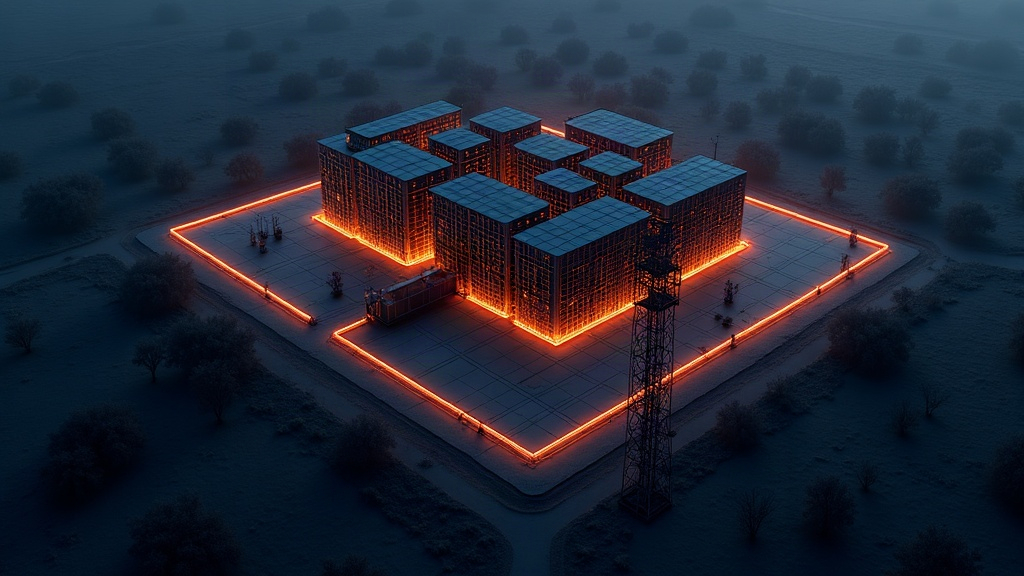
Fluidstack is building a $4 billion AI data center campus on more than 1,000 acres in Cameron County, Texas, along FM 106 near Rio Hondo, and site work is already underway. The Rio Grande Valley has never hosted a project at this scale, and the talent it requires is not sitting idle in South Texas.
Data center hiring comes in three waves
- •Construction and trades, first. Civil grading, electrical rough-in, mechanical, and low-voltage work fills the site from fall 2026 through the phased completion target of mid-2028.
- •Commissioning, the pressure point. A narrow window when every system must be verified before the first cabinet powers on. The engineers who do this work travel nationally and are always in demand.
- •Operations, for the life of the building. Once the campus is live, it needs a permanent crew of critical-facilities engineers and technicians who never leave.
The construction wave is a regional trades problem; commissioning and operations are national searches that must start now.
What these roles pay in 2026
| Role | Average base | Typical range |
|---|---|---|
| Commissioning engineer | ~$147,000 | $84,000 to $196,000 |
| Critical-facilities engineer | ~$132,000 | $117,000 to $147,000 |
| Critical-facilities technician | ~$89,000 | See note |
| Facilities technician (entry) | ~$54,000 | $42,500 to $77,000 |
The sanctioned data reports ~$89,000 as the average for critical-facilities technician without a confirmed market range; use that figure as your anchor and budget a modest premium above it to attract candidates willing to relocate to South Texas.
These are national averages, and a Harlingen posting will likely need a cost-of-living offset on the lower end and a relocation package on the upper end to move competitive candidates from Dallas, Houston, or out of state.
The certifications and background that actually matter
Commissioning engineers with a Commissioning Process Professional credential or 7x24 Exchange exposure are the hardest to find. For critical-facilities engineers, BICSI DCDC and ASHRAE credentials signal the mechanical and electrical fluency the role demands. Technician candidates benefit from ETA or CDCP certification, but hands-on experience in a live data center, hospital, or industrial control environment often outweighs paper credentials at hiring time. For this campus specifically, any background in closed-loop water systems, cooling tower chemistry, or SCADA-based building management is directly applicable given the planned closed-loop water cooling approach.
How to structure the offer
Commissioning engineers typically work on a contract or project basis through the build phase, then transition or exit. Budget a relocation package in the range of $8,000 to $15,000 for permanent operations hires you are moving to Harlingen. Candidates evaluating a long-distance relocation will also ask about per diem during the initial assignment period; $95 to $130 per day is a reasonable planning figure for South Texas. For roles that are hard to fill permanently, consider a hybrid structure: a lead engineer on permanent status supported by contract technicians during the ramp phase. Harlingen's cost of living is lower than Houston or Austin, which is a real quality-of-life selling point once a candidate visits, but it is rarely the reason someone applies, so lead with the work and the pay.
Where each role actually gets sourced
Commissioning engineers do not respond to job boards. They are working on another site right now and are reachable only through direct outreach. Critical-facilities engineers are often found at co-location operators, hyperscale campuses in the Dallas-Fort Worth corridor, or in the military-adjacent talent pool around Laughlin AFB in Del Rio and NAS Corpus Christi, where veterans leave with exactly the electrical and mechanical systems discipline these roles require. For technician-level roles, regional HVAC contractors, industrial maintenance programs at South Texas College, and the facilities staffs of Valley Baptist Medical Center and other regional health systems are realistic pipelines. Entry-level facilities technicians can be developed locally from trade school graduates and workers with backgrounds in the port, airport, or cross-border logistics facilities that already operate in Cameron County.
The Cameron County reality: strong on civil and industrial muscle, blind to flood risk as a hiring variable
The single most non-obvious staffing challenge for this campus is not the shortage of electricians or even commissioning engineers; it is the requirement for civil and environmental engineering experience specific to flood-prone, canal-adjacent infrastructure.
The Fluidstack site sits between Valley International Airport and the Port of Harlingen, in a drainage environment sensitive enough that the Harlingen City Commission has tabled the stormwater discharge agreement after public comment, leaving that arrangement unresolved as of early September 2026. That is not a construction permitting footnote. It means the facilities staff who run this campus long-term will need to manage stormwater, canal systems, and flood-risk protocols at a level of rigor that most data center operators in Phoenix or Northern Virginia never encounter. Hiring managers who treat this as a generic data center operations search will field candidates who are not prepared for it. The job description for senior facilities roles should call out drainage systems experience, floodplain familiarity, or civil infrastructure background explicitly.
The timeline is the hiring plan
Phase one construction begins fall 2026 with phased completion through mid-2028. Commissioning engineers need to be identified well before systems come online, which means sourcing should begin no later than early 2027 for the first buildings. Operations staff for permanent roles should be in final interviews before the first area is commissioned, not after. A campus this size will require a layered operations team, and building that team in South Texas from scratch takes longer than it would in a market with an existing data center ecosystem.
How NextDCX helps
NextDCX recruits for your toughest data center roles. Share the work, location, and experience your team needs. We run a fresh search for every role, approach people directly, and speak with every candidate before introducing them. You get people screened for the work, pay, location, and availability, ready to meet your hiring team. We also support recruiting partners. If the Harlingen campus is on your board, send us the roles and we start now. For the buildout, see Fluidstack's Cameron County filing.
Comp sources: ZipRecruiter and dcgeeks 2026 salary data.
Have a data center role to fill?
Send us the role Monday. Get three screened candidates by Friday, ready to meet your hiring team.
Read More Blog Posts
Rowan Files for Its Sixth and Final Temple Data Center, Completing a $4.2B Campus in Bell County, Texas
Rowan Digital Infrastructure, a Colorado-based hyperscale developer, is seeking city approval for the Lasso building, the sixth and final data center in its planned campus in Temple, Texas.
Fluidstack Breaks Ground on a $4 Billion AI Data Center Campus in Cameron County, Texas
Fluidstack, a New York-based AI infrastructure developer, has begun site work on a large-scale AI data center campus in Harlingen, Cameron County, Texas, representing a $4 billion first-phase investment on more than 1,00