
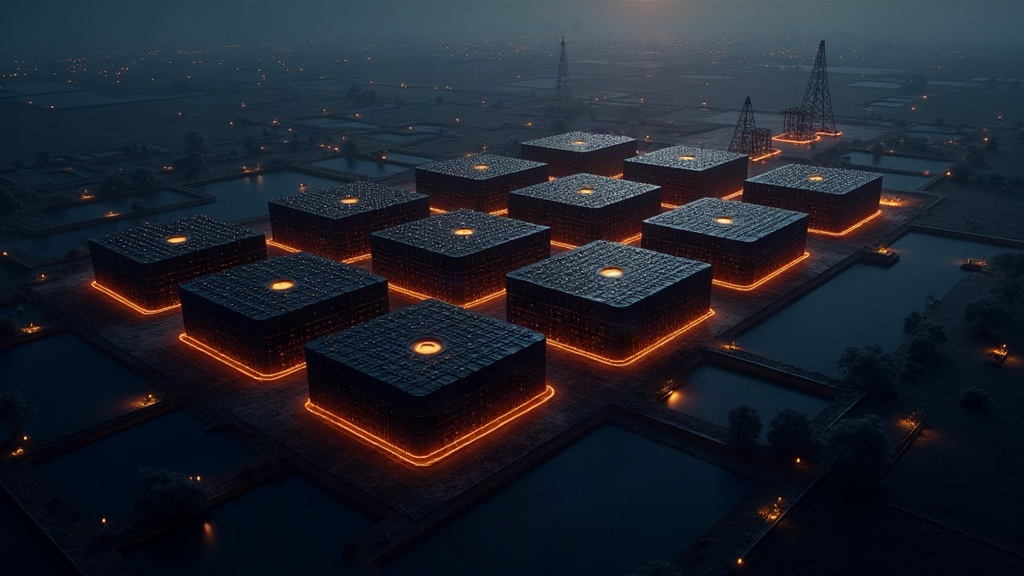
Abilene has a hiring problem that is only going to get harder. Oracle is building the flagship Stargate campus outside the city on behalf of OpenAI, a 1.2-gigawatt, eight-building complex on roughly 1,000 acres at Lancium's Clean Campus in Taylor County. Two buildings went live in September 2025, Oracle reported 42% of total capacity delivered as of August 2026, and the remaining buildings are still being commissioned and constructed toward a roughly 2027 completion target. That is a lot of parallel demand hitting a mid-sized West Texas city that had virtually no hyperscale data center footprint before this project arrived.
Data center hiring comes in three waves
- •Construction and trades, first. Civil, structural, electrical rough-in, mechanical. Abilene already has energy-sector tradespeople who can do this work. Public statements around the project describe approximately 9,000 construction jobs attached to the campus.
- •Commissioning, the pressure point. Integrated systems testing, BMS verification, power sequencing for NVIDIA GB200-class densities. This work is national and specialized. You cannot staff it from local supply alone.
- •Operations, for the life of the building. Oracle has described roughly 1,000 permanent jobs tied to the campus. These are the roles that compound in difficulty because they need both data center experience and the ability to relocate to, or already live in, Abilene.
The construction wave is a local energy-trades problem; commissioning and long-term operations are national recruitment problems with a West Texas relocation component attached.
What these roles pay in 2026
| Role | Average base | Typical range |
|---|---|---|
| Commissioning engineer | ~$147,000 | $84,000 to $196,000 |
| Critical facilities engineer | ~$132,000 | $117,000 to $147,000 |
| Critical facilities technician | ~$89,000 | varies by shift and market |
| Facilities technician (entry) | ~$54,000 | $42,500 to $77,000 |
These are national averages; Abilene's lower cost of living relative to DFW or Northern Virginia is a real recruiting lever, but candidates from major metros will compare against their local alternatives before they move.
The certifications and background that actually matter
For commissioning engineers, look for direct experience with high-density power distribution, generator paralleling, and UPS systems at hyperscale scale, not just commercial building work. NVIDIA GB200 infrastructure runs at power densities that disqualify generalist MEP candidates quickly. For critical facilities engineers and technicians, OSHA 30, NFPA 70E, and any OEM-specific training on large UPS platforms (Eaton, Schneider, Vertiv) separate real candidates from resume-padded ones. BMS and DCIM platform familiarity matters more than any single certification. For entry-level technicians, a background in industrial maintenance, oil and gas instrumentation, or wind farm electrical work translates directly to what Oracle's facilities team will need. That crossover is exactly why firms like Overwatch Mission Critical opened an Abilene operations hub in 2026: to convert West Texas energy workers into data-center-qualified trades through structured on-site training rather than importing a fully credentialed workforce from somewhere else.
A candidate who spent five years maintaining gas compression stations and holds NFPA 70E is a better starting point than a commercial HVAC tech with a data center line on their resume from a single project.
How to structure the offer
For commissioning roles, contract-to-hire or project-based contracts with a defined term tied to the building acceptance schedule are standard. Engineers doing integrated systems testing expect per diem, travel coverage, and hotel if they are working away from home. Do not try to fill commissioning roles with local-only candidates and expect to hit your timeline. For permanent operations roles, relocation assistance is not optional when you are recruiting from DFW, Houston, or out of state. Abilene's housing market has tightened significantly as the campus has grown, so a relocation allowance that was adequate in 2024 may not clear the bar in 2026. Build in either a lump-sum relocation payment or a managed relocation benefit and put it in the offer letter explicitly. For entry-level technicians converting from energy-sector backgrounds, structured training commitments and a clear 12-to-18-month promotion path into critical facilities technician roles improve acceptance rates considerably when you are competing against oil-field pay.
Where each role actually gets sourced
Commissioning engineers come from national candidate pools with hyperscale or colocation project histories. They work project to project, are well-networked, and respond to direct outreach far more than job boards. DFW is a secondary pool, but DFW is also running its own hyperscale commissioning demand simultaneously. Critical facilities engineers and senior technicians are found through mission-critical contractor networks, Oracle and hyperscale alumni communities, and targeted outreach into the Equinix, CyrusOne, and QTS operator talent bases. Some of the best candidates are already in Texas working other large builds. Entry-level and mid-level technicians are a real local opportunity in Abilene. The Overwatch hub is the most visible signal of that, but wind-farm operators, gas plant maintenance crews, and heavy industrial employers across Taylor County and neighboring counties are legitimate pipelines. Those candidates need a structured path in, not just a job posting.
The Abilene reality: strong on energy trades, thin on mission-critical operators
The non-obvious insight here is that Abilene is not a failed data center labor market. It is a deliberately redirected one. The city has deep roots in oil, gas, wind, and transmission work, and the physical skills those workers carry are genuinely useful in a hyperscale environment. What does not exist yet is a deep bench of people who have already managed critical facilities in a live data center. Firms like Overwatch are building that bench on-site in real time, converting traditional energy-infrastructure workers through structured training rather than waiting for an experienced operator population to appear. That means your sourcing strategy for Abilene should not mirror what you would do in Northern Virginia or Phoenix. You need a split approach: import the experienced mission-critical specialists for commissioning and senior ops roles, and build a local conversion pipeline for entry and mid-level positions.
The timeline is the hiring plan
Oracle reported 42% capacity delivered in August 2026. That leaves more than half of an eight-building, 1.2-gigawatt campus still in construction or commissioning. Public reporting points to roughly 2027 for full build completion. Commissioning demand is active now and will accelerate through each building acceptance cycle. Operations hiring follows commissioning on a roughly 60-to-90-day lag per building. If you are not already sourcing commissioning engineers and critical facilities leads, you are behind the wave, not ahead of it.
How NextDCX helps
NextDCX recruits for your toughest data center roles. Share the work, location, and experience your team needs. We run a fresh search for every role, approach people directly, and speak with every candidate before introducing them. You get people screened for the work, pay, location, and availability, ready to meet your hiring team. We also support recruiting partners. If the Abilene campus is on your board, send us the roles and we start now.
For the full buildout picture, see Oracle's Abilene Stargate campus overview.
Comp sources: ZipRecruiter and dcgeeks 2026 salary data.
Have a data center role to fill?
Send us the role Monday. Get three screened candidates by Friday, ready to meet your hiring team.
Read More Blog Posts
Axiom Core Announces 120–150 MW AI-Ready Data Center Campus on 30-Acre Site in Delano, Pennsylvania
Axiom Core is advancing a modern data center campus at 599 Lofty Road in Delano, Schuylkill County, Pennsylvania, targeting 120–150 MW of critical IT load at full build-out.
Stargate / Oracle Is Building a 1.2 GW AI Data Center Campus in Abilene, Texas
The Stargate program's flagship site is taking shape in Taylor County, Texas, where Oracle is developing and operating an eight-building, 1.2-gigawatt campus on roughly 1,000 to 1,100 acres at Lancium's Clean Campus outs